Exchanges – Swapisodes
The Swapisodes is a small collection of conversations in which we learn, think and share in public – exploring themes that resonate, swapping the microphone with coaches, thinkers, practitioners and leaders. Expanding our thinking with friends who are interested and interesting.
Watch to understand how we think, who influences us, and what questions we’re wrestling with. You’ll hear discussions on leadership, self-awareness, coaching, employee ownership, and creative controversy.
You can start anywhere. Every conversation stands alone.
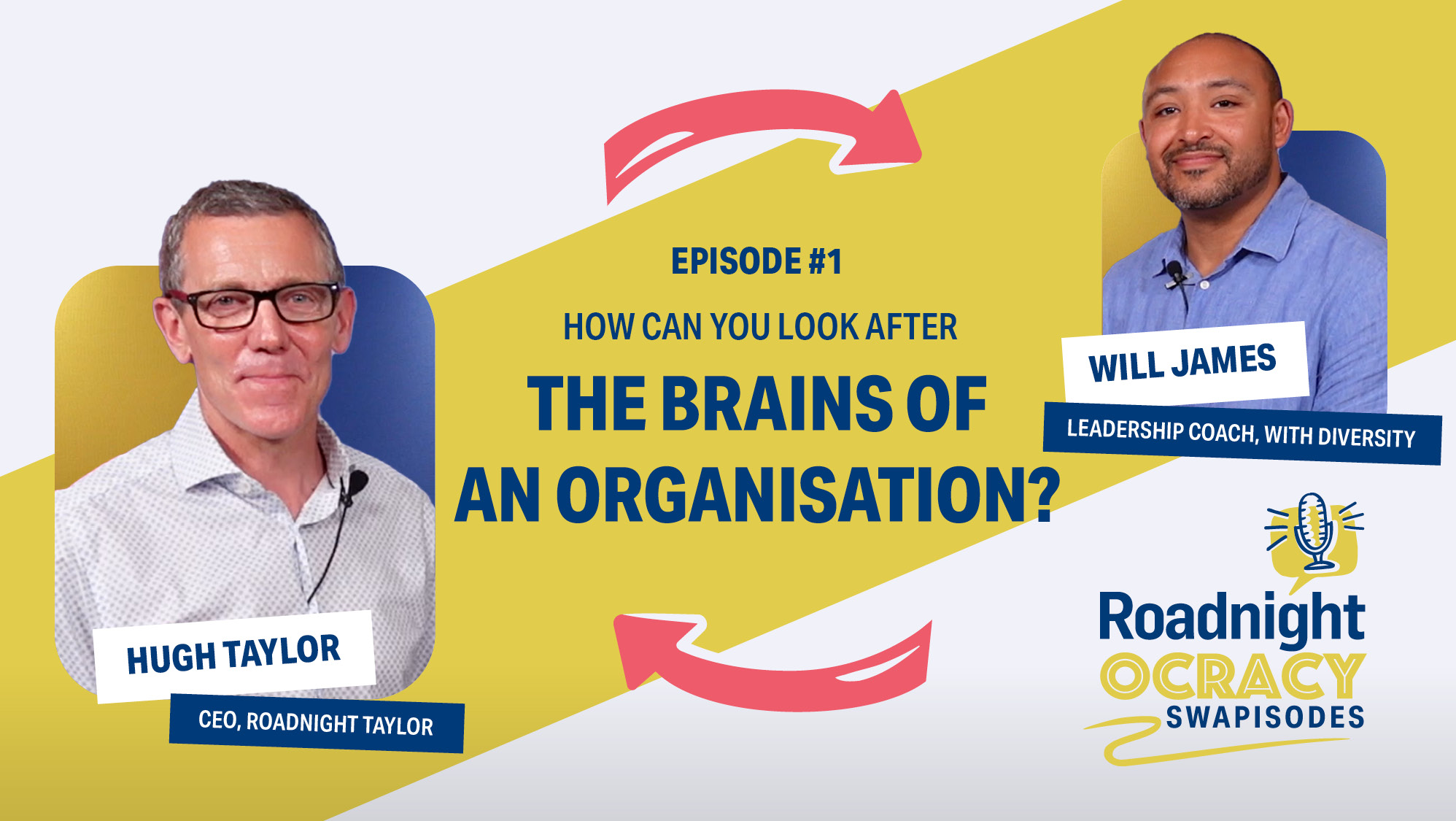
How can you look after the brains of an organisation?
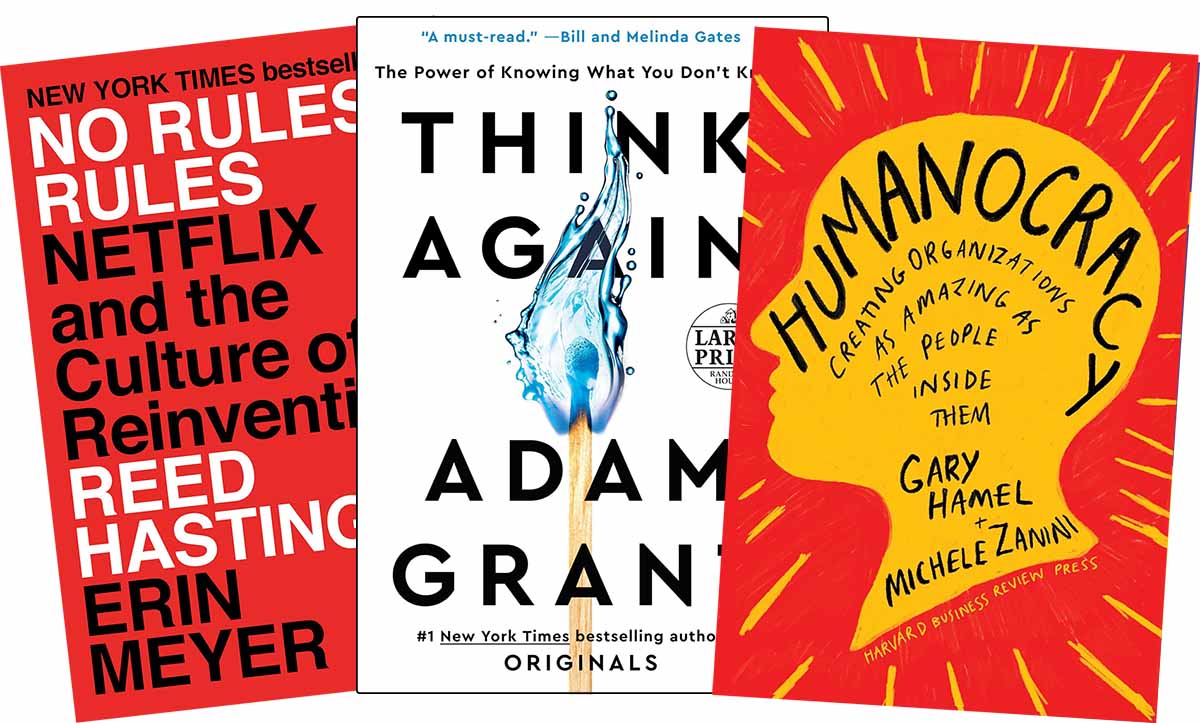
Jim Collins’ Good to Great and Gary Hamel’s Humanocracy shaped our approach: lead with humility, build the business to serve people. Will explores how we’ve applied this – reducing clients by 80%, working four days, and prioritizing our team’s thinking capacity above all else.
Better to say it wrong than to say nothing at all?
Will James introduced me to creative controversy: the idea that high-performing teams need risk alongside safety. In this episode, he explains why saying the imperfect thing – and trusting the relationship to survive it – is actually a sign you belong.
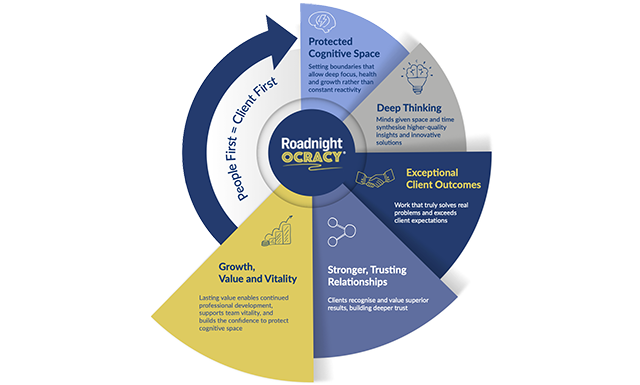
What if people first meant client first?
Client satisfaction: 94 (top 0.1%). Employee satisfaction: 91. Four-day week, protected thinking time, no direct client access to engineers. Dr Julia Carden explores how putting people first and clients first aren’t competing priorities – they’re the same principle in action.
What if the business existed to serve the individual?
We flipped the usual model: the business serves individuals, not vice versa. Nick Lloyd, who’s watched me fail at businesses before, asks what’s different this time – the answer is realizing skills can be learned, plans discarded, and hierarchies work better upside down.
Does your team even want ownership?
Nick Lloyd is a corporate lawyer and has spent 25 years advising on employee ownership. I know very little about it, so I ask everything: EOTs versus EMI schemes, what if your team doesn’t want ownership, how to reward without giving away control. My education, on camera, for free.
Can fewer fee earners than those supporting them work?
We didn’t import any consultancy model – we built the inverse. We ended up with five Connectologists® and ten people supporting them. Bob Hodgetts from Everoze asks how that works financially, whether it’s intentional, and explores the auction we ran to reduce clients by 80% and what I’d change next time.
No bosses, lots of leaders: can it scale?
Someone called Everoze a cult – 85 people, no bosses, open book on salaries. Founder Bob Hodgetts explains the mechanics: technology teams, functional teams, peer-reviewed pay, and why they’re pragmatic about it – bossless doesn’t work for everything, so they built one spin-off hierarchical on purpose.
What if every relationship were adult-adult?
Parent-child dynamics dominate business – the expert with answers, mandatory training, nuclear button escalations. Alasdair Cant, behaviour change specialist, asked how we create deeper thinking. The question that emerged: what if both sides showed up as adults by default? This is our answer so far.
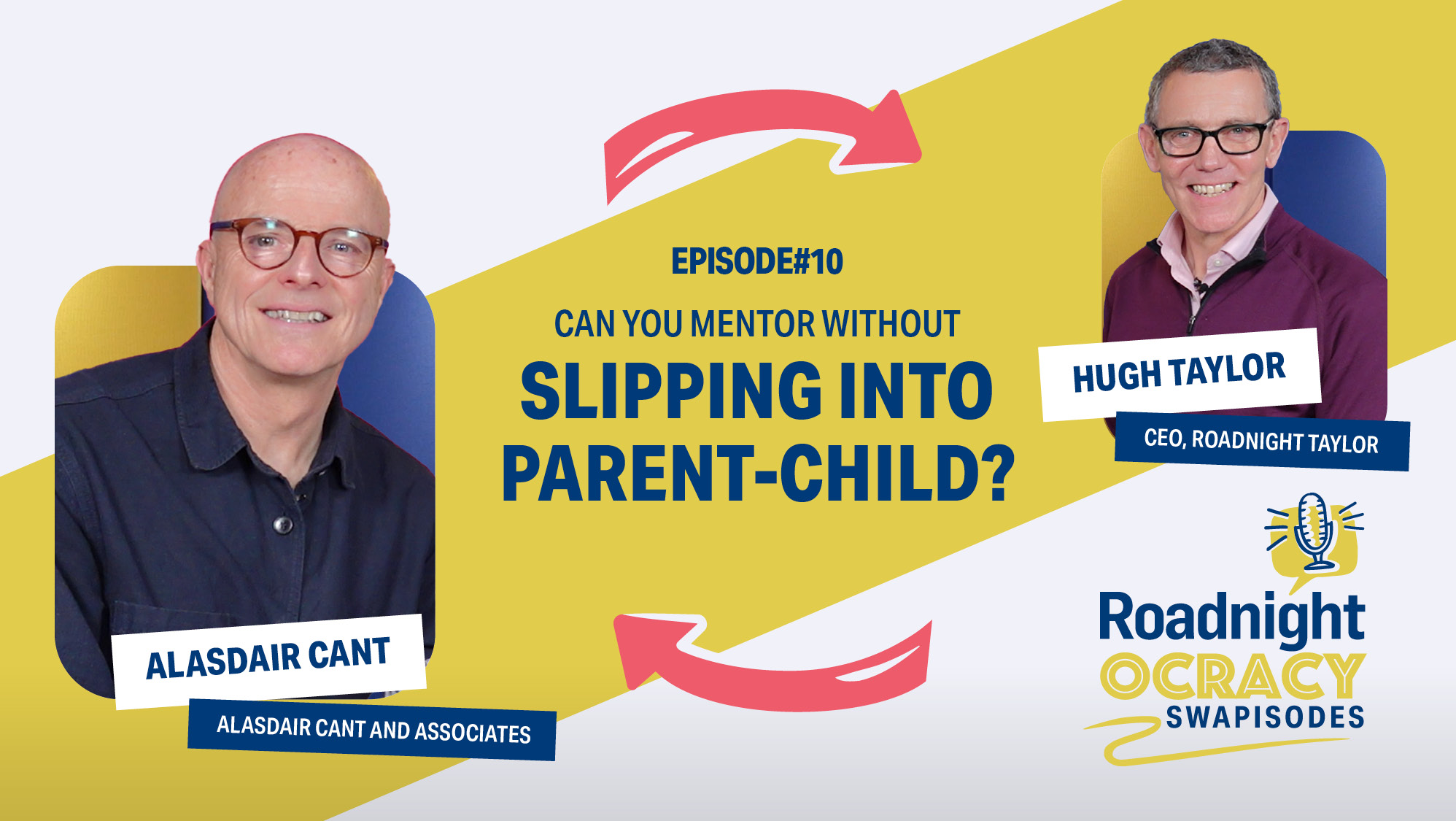
Can you mentor without slipping into parent-child?
The leader’s dilemma: someone isn’t getting it, you see what they can’t, do you coach them to find it or just say it? Alasdair Cant explores navigating coaching versus mentoring without parent-child dynamics. What emerged: transparency isn’t honesty – it’s the mechanism that keeps relationships adult-adult.